Picnic Blanket Size: Compare Spread-Out Space With Packed Bulk
Map out seats, food and bags before choosing a picnic blanket. Then test the packed bundle against your actual carrying setup, so extra lounging space does not become an awkward load.
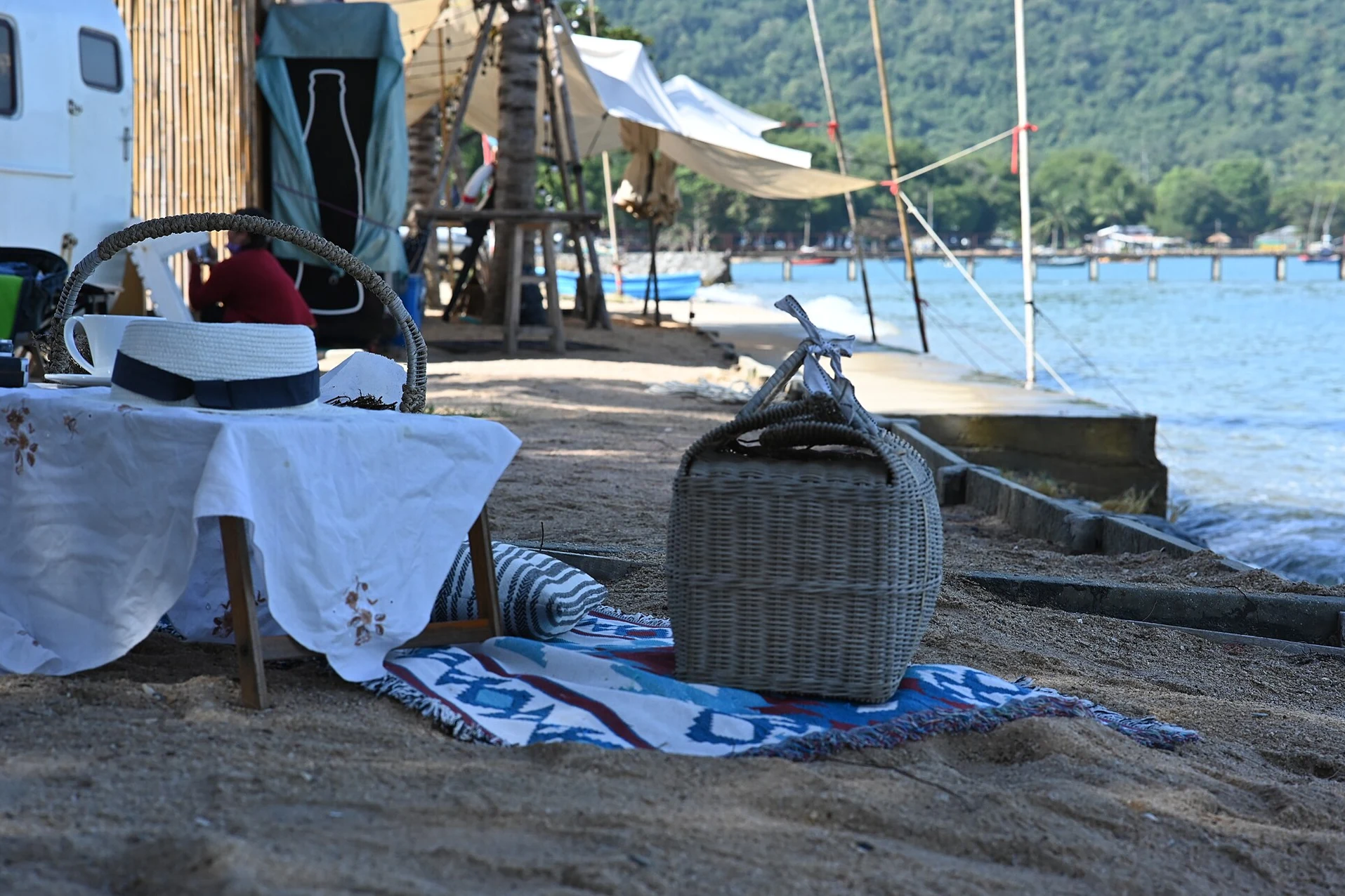

Put your picnic basket on the floor, sit beside it and ask the other people coming along to join you. That arrangement tells you more about useful blanket size than a photograph of an empty blanket on grass.
A blanket has two jobs: provide the space you want at the picnic and fit the journey there. Choose against both. A generous spread may suit a short walk from the car but be an awkward bundle when you are also carrying lunch and holding a child’s hand.
The following floor test is an illustrative planning exercise, not a standard allowance per person. Use your own people, belongings and sitting preferences.
1. Build the picnic you actually expect to have
Start with the objects that will occupy the blanket. Set out the basket or lunch bag, the containers you expect to open, reusable cups and any day bag you want beside you. An unopened basket alone understates the space needed once lunch is served.
Decide what can stay off the blanket. Shoes, a closed backpack or an empty carrier might sit elsewhere if the location permits. If you want everything on the fabric, include everything in the test rather than treating bags as an afterthought.
Next, sit as you normally would. Crossed legs, legs extended and reclining create different layouts. For a family outing, include the position of an adult helping with food rather than assuming everyone stays in a neat row.
- For a quick lunch, test seated places around open containers.
- For reading or lounging, include the space needed to lean back.
- For a shared meal, check whether everyone can reach the food without moving through another person’s place.
2. Mark a rectangle and test its edges
Use an existing sheet or a tape measure to mark the proposed blanket dimensions on the floor. Keep loose markers out of walking routes. If you use removable tape, check that it is suitable for the floor finish first.
As an example, mark a rectangle 180 centimetres long and 150 centimetres wide. These numbers are simply a starting shape to test, not a recommendation for a particular group size. Place two seated people along opposite sides, with lunch between them.
Now try the ordinary movements: open the basket lid, put a cup down, extend a leg and reach for a container. Notice which part of the boundary becomes restrictive. You may need more width around the food rather than more length behind the people.
Repeat with a second rectangle, perhaps 200 by 180 centimetres. Record what the added space actually changes. If it only creates an unused strip, it may not justify a larger packed bundle. If it makes the shared meal workable, the increase has a clear purpose.
3. Compare packed shape, not just folded length
Record the packed length, width and thickness for each candidate when those measurements are available. A bundle described by only its longest side is difficult to compare with your bag: the other dimensions still have to fit.
A flat fold and a thick roll can occupy space differently, even when both are easy to hold on their own. Check the opening of your carrier as well as its interior. A bundle that fits inside may still be awkward to push through a narrow opening.
Use a folded towel or another soft item to approximate the listed packed shape. This tests space only; it does not reproduce the blanket’s weight or folding behaviour. Put the stand-in beside your filled lunch bag, cups and other essentials.
If you plan to carry the blanket separately, decide which hand or shoulder will carry it. The route-based test in choosing between a tote and a crossbody bag is also useful here: judge the whole load, not an empty carrier.
4. Keep one comparison card for both tests
Use this card for two or three candidates. Write “unknown” rather than guessing a missing measurement.
| Check | Candidate A | Candidate B |
|---|---|---|
| Open dimensions | Record length × width | Record length × width |
| Floor-layout result | Seats, food and movement | Seats, food and movement |
| Packed dimensions | Record all available dimensions | Record all available dimensions |
| Listed weight | Record or mark unknown | Record or mark unknown |
| Carry arrangement | Inside bag or carried separately | Inside bag or carried separately |
| Main compromise | Identify the actual limitation | Identify the actual limitation |
Reject a candidate that fails an essential requirement. For the remaining options, choose the compromise you are willing to make: closer seating, less lounging room or a separate bundle to carry.
5. Know what the size test cannot establish
The floor layout answers a space question. It does not establish how a blanket handles damp ground, how its surface feels or how it will stand up to use. Treat any backing, care or performance claims as separate product details to check.
Likewise, a packed-size mock-up cannot confirm how easily the real blanket returns to its carrier. If you can inspect it, try folding and fastening it yourself. Include the carrier in the comparison rather than measuring bare fabric alone.
Before ordering, confirm that the selected variant matches your notes; the size-and-color cart check provides a useful final step. Keep your tested layout and packed measurements together so a different size does not slip into the order unnoticed.
Lumens or Watts: Which Number Helps You Replace a Bulb?
Lumens describe light output; watts describe energy use. Read a worked packaging example, use a brightness reference table and keep fixture compatibility as…
Choosing a Photo Frame: Check More Than the Outside Dimensions
The stated frame size does not tell you how a photograph will be supported or what will touch it. Check the opening, mat,…

Choose Folders for Important Paper Without Relying on the Word ‘Archival’
Choose folders by their stated materials, support and usable size. This guide explains what to verify beyond an archival label, with a worked…