Will a Replacement Lampshade Fit Your Existing Lamp?
A shade’s width and shape are only part of the fit question. Record the existing attachment, dimensions and manufacturer requirements, then compare a replacement without relying on improvised fittings or wiring changes.
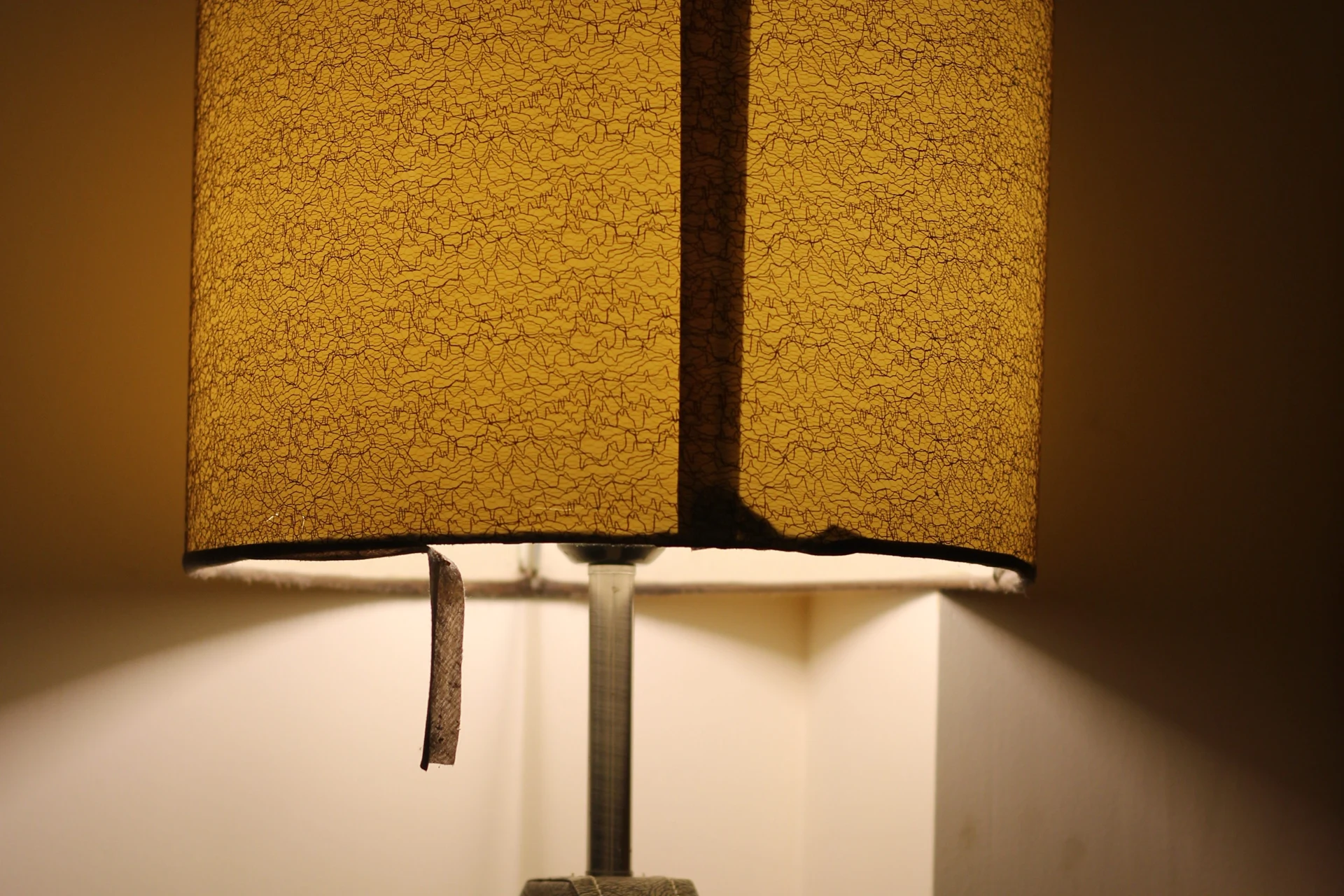
A replacement lampshade can look right beside the base and still leave the essential fit question unanswered. Before choosing a fabric or shape, make a comparison sheet with three headings: attachment, dimensions and documented compatibility. A candidate needs a clear answer under all three.
Keep this check to product information and observations you can make without dismantling the lamp. Switch off and unplug a plug-in lamp before inspecting it, and let it cool. Do not alter wiring, bend hardware or improvise an attachment to make a shade fit.
Identify the lamp and the shade attachment
Record the lamp’s maker, model and product identifier if accessible. Photograph the whole lamp and the shade attachment where it is already visible. If the identifying label cannot be reached safely, leave that field unknown rather than tipping a heavy or awkward lamp to find it.
Describe what you can actually see. Where does the shade meet its support? Is it held near the bulb holder, supported above it or attached in another way? Use the terminology in the lamp’s documentation when available, and keep a photograph alongside it.
For the candidate shade, look for a clear attachment description, dimensions and a photograph of the fitting. Do not assume a retailer’s familiar-sounding label proves it matches your lamp. If the listing does not explain what the term means, ask for clarification tied to your exact model.
A useful question is: “Is this shade, with its supplied fitting, compatible with lamp model X without modification?” That is more precise than asking whether it fits a “standard table lamp.”
Measure the existing shade as a reference
If the current shade fits correctly, its measurements give you a comparison point. Record the maximum width, top width, bottom width and vertical height where those measurements apply. For a rectangular shade, record both width and depth rather than compressing its footprint into one number.
Use the same units throughout your sheet. Note whether a listing’s “height” refers to the shade body or includes another part; if the diagram does not make that clear, flag it. Two numbers with different measurement definitions are not a meaningful comparison.
The fitting’s position matters too. A candidate with similar outside dimensions may sit differently if its attachment is positioned differently within the shade. Record any manufacturer-provided drawing that shows this relationship rather than guessing from a styled photograph.
Do not remove an unfamiliar shade assembly just to obtain a measurement. Mark inaccessible details as unresolved and ask the manufacturer or retailer which dimensions they need. An incomplete sheet is preferable to a confident but invented measurement.
Treat clearance as a documented requirement
Check the lamp’s instructions for shade restrictions, permitted bulb specifications and any stated clearance requirements. Check the candidate shade’s instructions as well. Preserve the exact wording or save the relevant document so that you are not comparing from memory.
Do not invent a universal gap between a bulb and a shade. This guide supplies no generic clearance number and does not override product instructions. If the two sets of information do not establish compatibility, leave that question unresolved.
IKEA’s product-support hub includes assembly guides and general support. For an IKEA lamp, it can be a starting point for finding the relevant documentation, but the hub itself is not confirmation that a particular replacement shade fits.
If information is missing, send the lamp identifier, shade identifier and fitting photographs with your question. Request an answer about the specific combination, including any restrictions. Keep that answer with the comparison sheet.
Use a shade comparison sheet
Copy this table for each serious candidate. “Unknown” is a valid entry and a reason to pause, not an invitation to fill the gap with an assumption.
| Check | Existing lamp or shade | Candidate shade |
|---|---|---|
| Identity | Lamp model and current shade reference | Exact product and variant |
| Attachment | Documented description and photograph | Supplied fitting and stated compatibility |
| Outer dimensions | Width, depth where relevant, and height | Equivalent measurements using the same units |
| Fitting position | Drawing or accessible reference | Drawing or confirmed measurement |
| Restrictions | Relevant lamp instructions | Relevant shade instructions |
| Decision | Requirements to preserve | Confirmed, unresolved or unsuitable |
Consider an illustrative shortlist. Shade A has the preferred shape and similar width, but its fitting is not specified. Shade B has a different silhouette, while its manufacturer explicitly confirms compatibility with the identified lamp and provides the relevant restrictions.
Shade A remains unresolved; its appearance cannot close the information gap. Shade B can move to the visual comparison stage, provided its instructions also suit the intended setup. The example is a decision method, not a recommendation for a particular product.
Check placement after compatibility, before ordering
Once the fit details are established, compare the candidate’s outline with the space around the lamp. Record nearby shelves, walls and objects that may constrain its size. Use the supplied dimensions to judge placement, while still following all manufacturer requirements.
Take a photograph of the lamp in its usual position to compare proportions. This is an aesthetic check: you may prefer a wider shade, a taller profile or a different fabric. None of those preferences establishes mechanical compatibility.
At checkout, confirm that the selected shade variant matches the one you checked. The habit described in verifying size and color before paying is especially useful when one listing contains several dimensions.
Save the listing details and the compatibility answer with the order. If the delivered fitting differs from what was documented, stop and contact the seller. A shade purchase should not turn into a wiring project or an experiment with improvised hardware.
Sources and editorial notes
Lumens or Watts: Which Number Helps You Replace a Bulb?
Lumens describe light output; watts describe energy use. Read a worked packaging example, use a brightness reference table and keep fixture compatibility as…

Choosing a Photo Frame: Check More Than the Outside Dimensions
The stated frame size does not tell you how a photograph will be supported or what will touch it. Check the opening, mat,…

Choose Folders for Important Paper Without Relying on the Word ‘Archival’
Choose folders by their stated materials, support and usable size. This guide explains what to verify beyond an archival label, with a worked…