Original or Copy? Decide What Paper Art to Display
A family drawing and a replaceable print need different display decisions. Use this matrix to weigh replaceability, light and display duration before choosing what belongs on your wall.
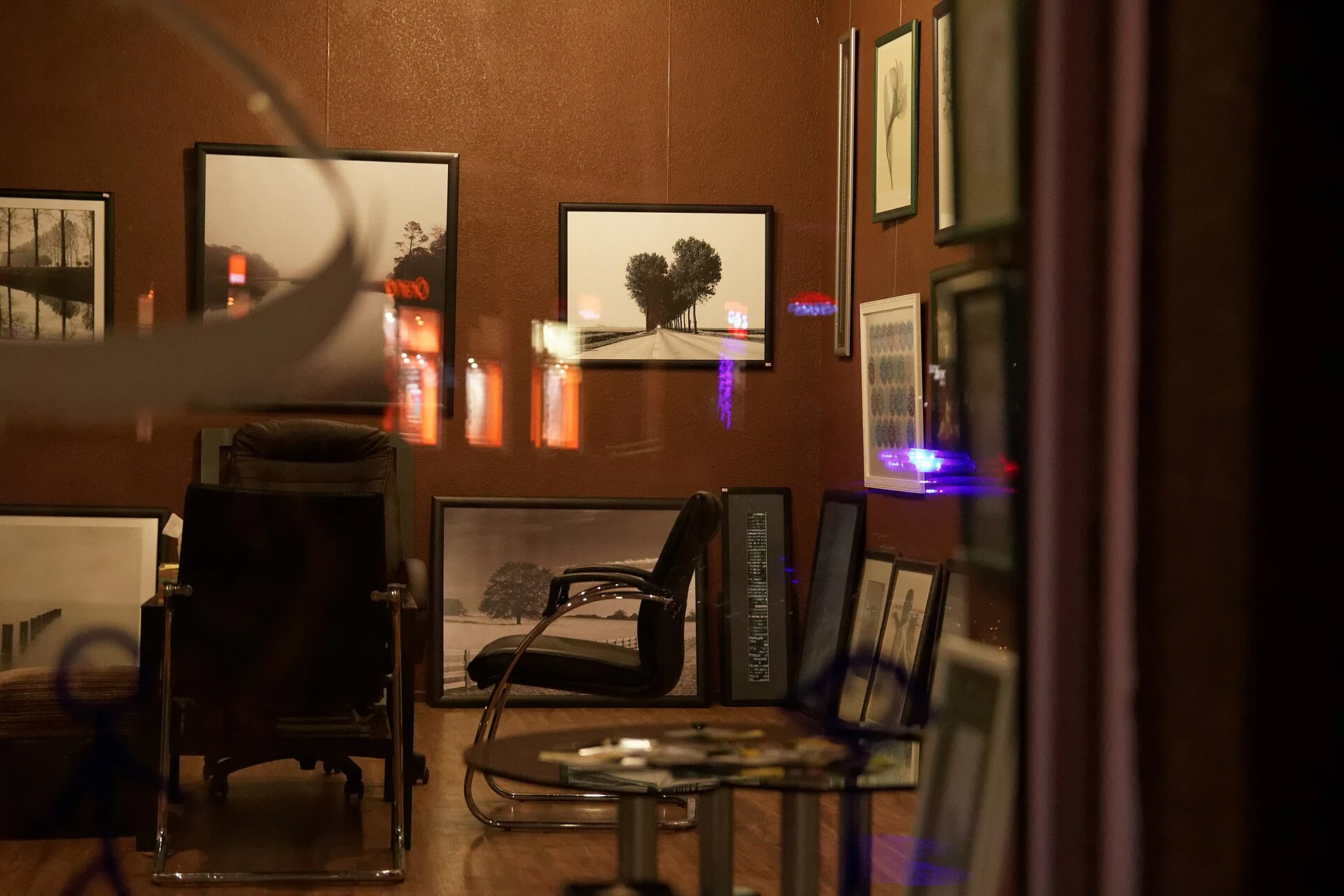

A child’s first drawing, an inherited letter and a replaceable poster can fit the same frame. They do not carry the same consequences if the paper changes. Before choosing a mount or wall color, decide which object you are willing to expose and which one you want to keep out of everyday display.
For an irreplaceable piece intended to stay on the wall indefinitely, a reproduction is a useful default. It lets the image become part of the room without making the original carry the whole decorating job. The original still needs suitable storage; making a copy does not solve that part.
Start with what cannot be replaced
Write one sentence about the object: “This is the only handwritten version,” “I can order another print,” or “The image matters to me, but this particular sheet does not.” That sentence is more useful than a label such as valuable or inexpensive.
Replacement value is not necessarily purchase value. A free sketch from a relative may be unique. A print bought for a significant amount may still be available in another edition. Decide whether you care most about the image, the physical sheet, or both.
If the paper has a signature, texture, indentation or handwritten detail that matters to you, acknowledge what a reproduction will leave out. You can still choose a copy for daily display and reserve occasional viewing for the original. That is a personal display arrangement, not a promise that occasional handling is harmless.
Assess the wall before the frame
Look at the proposed location at different times of day. Does a bright patch travel across it? Is it close to a window, radiator or vent? Would the artwork remain there for a short occasion, a season or an open-ended period?
Paper care calls for minimal exposure to all kinds of light and no exposure to direct or intense light. A wall outside a sunbeam is therefore not automatically a suitable long-term location for an important original. Framing should not be treated as making paper immune to fading or other change.
Record what you actually see rather than calling a room “quite dark.” “Direct afternoon sun reaches the frame” gives you a decision you can act on. If the location is bright and you want artwork there permanently, choose a replaceable reproduction or reconsider the location.
Use a three-part display matrix
The following matrix is a conservative decision aid, not a calculation of safe exposure. It combines the consequences of loss with your intended use. No row establishes a guaranteed safe display period.
| Replaceability | Light and duration | Practical choice |
|---|---|---|
| Unique or irreplaceable | Bright location or indefinite display | Display a reproduction; choose suitable storage for the original. |
| Unique or irreplaceable | Lower-light location, limited occasion | Prefer a copy; seek individual advice if displaying the original matters. |
| Replaceable sheet | Everyday display away from direct or intense light | Display it if you accept possible change and replacement. |
| Replacement uncertain | Any proposed location | Treat it as irreplaceable until you confirm otherwise. |
Consider an illustrative example: you want your grandmother’s handwritten recipe above a kitchen table for several years. The handwriting is unique, and the planned display is long term. A readable reproduction meets the decorating goal. Moving the original into a frame does not answer the preservation question.
By comparison, a currently available poster in a lower-light room may be a reasonable everyday display choice if you are comfortable replacing it. The distinction is your tolerance for losing that particular sheet.
Make the reproduction serve the room
A copy need not pretend to be the original. You might reproduce a whole letter with its margins, enlarge a small drawing, or use a neutral border around a recipe. These are styling choices; select the treatment that preserves the details you want to see.
Check the proposed copy at its intended display size before committing to the frame. Can you read the handwriting? Has a signature been cropped? Are faint pencil marks still visible? For a commissioned reproduction, the checking habits in this personalized gift proof checklist are also useful.
Do not flatten, dismantle or otherwise stress a fragile original just to obtain a better copy. If copying requires more handling than the object seems able to tolerate, pause and seek advice. A slightly imperfect reproduction is preferable to forcing the original into a convenient position.
Give the original a separate plan
For flat works on paper, suitable protective enclosures include acid- and lignin-free folders, mats and document boxes. Material choice still needs care: some media are sensitive to alkaline conditions, and polyester can develop an electrostatic charge that lifts powdery or flaking media. A clear sleeve is not a universal answer.
Keep the storage location clean, stable and away from direct or intense light, radiators, vents and places vulnerable to leaks. Avoid attaching tape, glue or rubber bands to the paper. Existing tears, flaking surfaces or other condition problems may require a paper conservator rather than a new frame.
Finish with a short record: object, chosen display version, location of the original and reason for the decision. For example: “Recipe—copy on dining-room wall; original in labeled protective folder; unique handwriting.” That note makes the arrangement understandable to anyone else who cares for the piece.
Sources and editorial notes

How to Divide a Room With Furniture Without Blocking Everyday Routes
A sofa can define a seating area while a low sideboard gives dining its own edge. Trace three everyday journeys first, then test…

Open Shelves or Closed Storage? Sort by Access and Visual Clutter
Sort belongings by how often you retrieve them and how you feel about seeing them. A four-part matrix helps assign books, cables, serving…
Choose a Bedside Table by Usable Surface, Not Just Width
A lamp can claim much of a bedside table before your book, glasses and water arrive. Use paper footprints to test the remaining…