Open Shelves or Closed Storage? Sort by Access and Visual Clutter
Sort belongings by how often you retrieve them and how you feel about seeing them. A four-part matrix helps assign books, cables, serving dishes and household supplies to useful storage locations.

Put a favorite book, a bundle of spare cables, a serving platter and a refill pack on the table. Each needs a home, but “make the room tidier” is too broad to choose one. Ask two questions about each item: how often do you retrieve it, and do you want to see it?
Those answers create a useful starting point for choosing open shelves or closed storage. Frequent access does not automatically mean display. An object can be useful every day while still being something you prefer behind a door.
Sort by retrieval before judging appearance
Take one storage area at a time and list what it actually holds. Split broad categories when they serve different routines. A book you consult every evening belongs in a different access group from books you are keeping but rarely open.
Use two retrieval labels for the first pass: frequent and occasional. Define them according to your household. You might call something frequent if you reach for it most days, while another person might use the label for a weekly activity.
Write down where each item is used as well. A serving platter retrieved occasionally still needs a sensible route to the dining table. A cable used at the desk deserves a different location from a spare cable kept for travel.
Next, judge the visible group as you would normally leave it. Do not assess cables only when perfectly coiled if they usually return as a loose bundle. Your storage choice should accommodate the habit you have, or a specific habit you are willing to adopt.
Use a two-axis storage matrix
For the second axis, use “comfortable seeing” and “prefer concealed.” These labels describe your response to the belongings. A colorful book collection might feel orderly to one person and visually busy to another.
| Retrieval frequency | Comfortable seeing | Prefer concealed |
|---|---|---|
| Frequent | Consider an open shelf near the activity. | Consider a convenient drawer or cupboard. |
| Occasional | Display selectively if you enjoy the view. | Consider closed storage with a clear location record. |
The matrix gives each group a candidate home, not a final furniture specification. It does not establish shelf capacity, dimensions or suitability for a particular item. Those checks belong to the actual storage unit and the belongings you intend to put there.
Keep visibility separate from identification. If you conceal several similar groups, write down which cupboard or drawer holds each one. You can know where something is without leaving every item on display.
Work through books, cables, dishes and supplies
Imagine a living-and-dining room with one bookcase and one cabinet. The household consults a small group of books regularly and enjoys seeing their spines. Those books receive an open shelf near the reading chair. Less-used books remain together elsewhere rather than filling the most convenient shelf by default.
The spare cables are retrieved occasionally and look untidy to this household. They go into a designated compartment inside the cabinet, with a short contents note. The cable used every day at the desk receives its own convenient home near the desk. Splitting the category prevents the daily cable from disappearing among the spares.
The serving platter comes out for shared meals. Its owners like its appearance, so they consider displaying it. They first check whether the proposed location suits the platter and allows straightforward retrieval. If the display arrangement makes getting it out awkward, they choose a suitable cupboard instead.
Household refills are used in several rooms, and the packaging is something this household prefers concealed. They assign a suitable closed location and record what belongs there. Product-specific storage directions still govern the individual supplies.
Before allocating a large area to entertaining pieces, separate what you use from what you only need for an occasional gathering. That distinction can help you reserve convenient space for regular items and plan a temporary solution for occasional shortfalls.
Test access with the furniture you already have
Assign each group a temporary location within your existing suitable storage. Use a written map if moving everything at once would disrupt the room. The test is whether the proposed arrangement fits retrieval and return during ordinary activities.
- Choose one routine, such as reading or setting the table.
- Retrieve the items from their proposed homes.
- Notice which other objects you have to move.
- Return everything when the activity is finished.
- Record one change that would make the sequence easier.
If an item repeatedly stays on a nearby surface, investigate that moment. Perhaps its assigned home is inconvenient, its group is too crowded or another person does not know where it belongs. Change the location before assuming a new cabinet will solve the problem.
Turn the results into a specific storage brief
Write your decision as a list of jobs: “Open space for current books; closed compartment for spare cables; suitable accessible home for the platter; separate location for refills.” Add the dimensions and any product requirements you still need to check.
If you are considering coordinated furniture, compare each piece against those jobs. Buying a furniture pair when only one piece is on sale is a useful next consideration when the proposed solution includes two units.
Leave some decisions provisional until you have tried the return routine. A room can use both open and closed storage successfully, but the useful mix comes from the belongings, the available space and what the household wants to see.

How to Divide a Room With Furniture Without Blocking Everyday Routes
A sofa can define a seating area while a low sideboard gives dining its own edge. Trace three everyday journeys first, then test…

Choose a Bedside Table by Usable Surface, Not Just Width
A lamp can claim much of a bedside table before your book, glasses and water arrive. Use paper footprints to test the remaining…
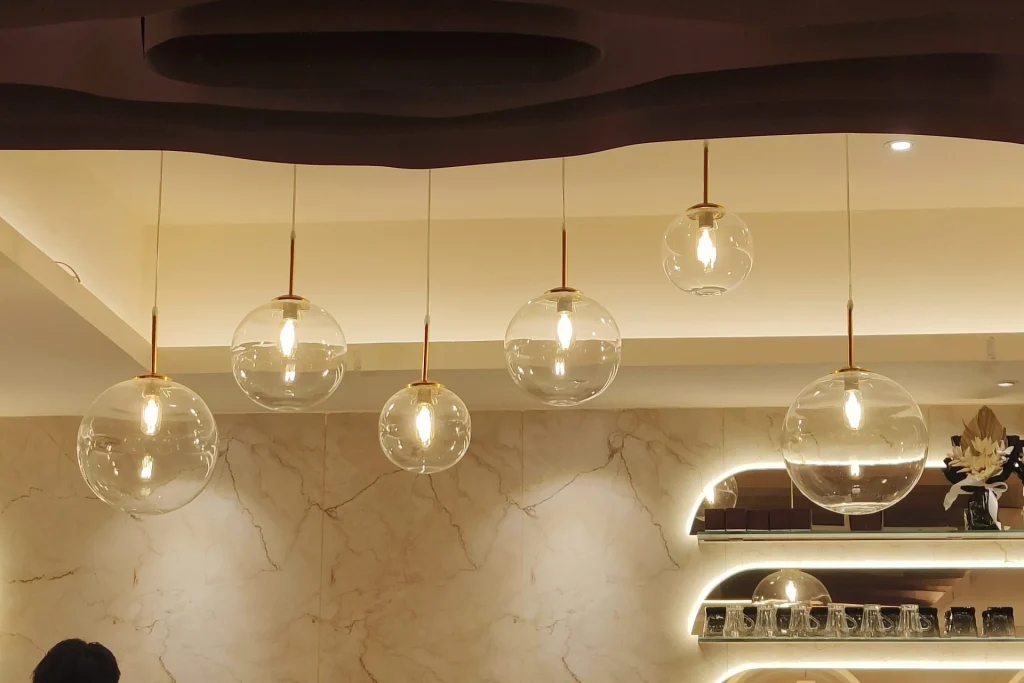
How to Choose Light Color for a Room With Several Lamps
Start with the lamps you use together, then record their appearance and brightness separately. A simple bulb record and two illustrative room schemes…