How to Size a Tablecloth for Everyday Meals and Occasional Guests
Measure the tabletop, calculate the drop, then test it with someone seated. This practical sizing method covers everyday and extended tables, including chair arms, corner hangs and the limits of using one cloth for both.
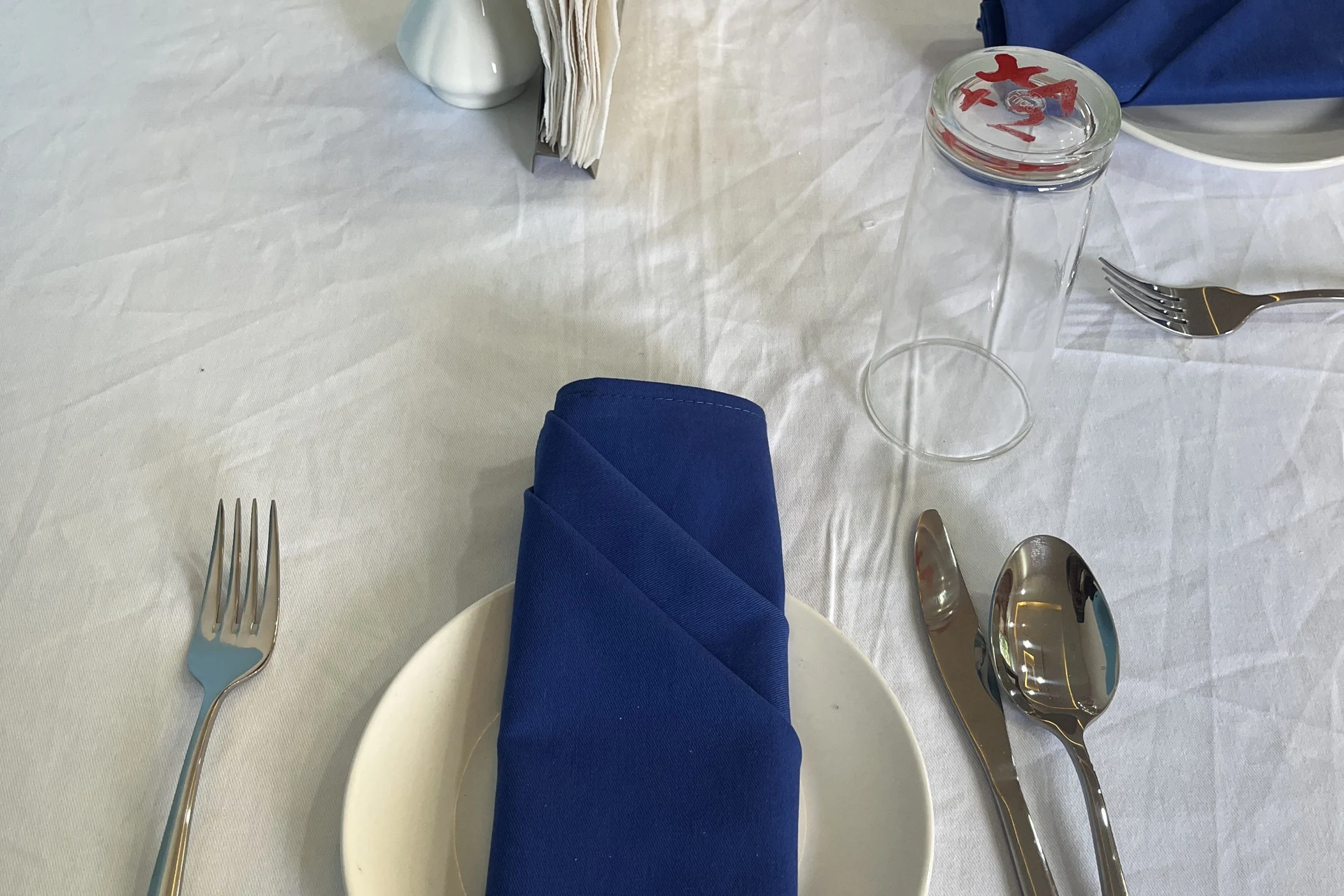
A rectangular table measuring 140 × 90 cm needs a 180 × 130 cm cloth for an even 20 cm drop. Extend that same table to 200 cm, and the equivalent cloth becomes 240 × 130 cm. The extra length changes the answer before colour or fabric enters the decision.
Those measurements are an illustrative starting point, not a recommended drop for every dining room. Your useful drop is the one that looks right to you and works with the chairs while people sit, move and leave the table. Measure first, then rehearse the fit.
Measure each version of the table
Record the tabletop length and width at its outer edges. Use one unit throughout. For an extending table, take a second set of measurements with every leaf you intend to use installed. Do not assume that a remembered extension length is accurate enough.
Write the measurements as length × width and label each configuration: everyday, one leaf or fully extended. This prevents a loose note such as “200” from becoming a mystery when you compare cloth sizes later.
For a round table, record the diameter through the centre. For an oval table, record the longest length and widest width, but also check the cloth’s shape: matching the overall dimensions does not tell you exactly how its edge will fall around the curves.
Keep the seating arrangement beside the measurements. An end chair with arms may create a different fit problem from the armless chairs down the sides. If guests use different chairs, include those in the extended-table trial.
Calculate the drop in both directions
For a centred rectangular cloth, use these calculations:
- Cloth length = table length + twice the desired end drop.
- Cloth width = table width + twice the desired side drop.
- Actual end drop = (cloth length − table length) ÷ 2.
- Actual side drop = (cloth width − table width) ÷ 2.
The end and side drops do not have to match. You might prefer shorter sides beside the chairs and slightly longer ends. Calculate each direction separately rather than calling the whole cloth a “20 cm drop” when only one dimension delivers that result.
| Table configuration | Tabletop | Calculated cloth size |
|---|---|---|
| Everyday | 140 × 90 cm | 180 × 130 cm |
| Extended | 200 × 90 cm | 240 × 130 cm |
For a round cloth on a round table, add twice the chosen drop to the table diameter. A rectangular cloth’s corners hang differently from its straight edges, so the arithmetic still needs a physical check.
Test the edge with someone seated
Use a cloth you already own to approximate the calculated overhang. Fold it to the proposed dimensions where possible, or measure its existing drop and note the difference. A folded trial is useful for judging position, although its extra bulk may behave differently from a single layer.
Centre the cloth, pull out a chair and sit as you would during dinner. Observe where the edge meets your lap. Move the chair closer, shift your knees and stand up again. Decide whether the contact feels comfortable or keeps drawing your attention.
Next, try the chair arms. Watch whether an arm catches or lifts the cloth as the chair moves underneath. Check the corners from the end seats too: a corner may hang into a place that the straight-edge measurement did not reveal.
Repeat with the chairs intended for guests. The aim is to find a workable arrangement for your furniture, not to meet a universal clearance number. Keep the cloth free while testing; do not tuck it around chair arms to make an unsuitable fit appear settled.
Decide whether one cloth can serve both sizes
In the example, the 240 × 130 cm extended-table cloth produces a 50 cm end drop on the everyday table: (240 − 140) ÷ 2. Its side drop remains 20 cm. That is a noticeably different arrangement from the evenly proportioned extended version.
The smaller 180 × 130 cm cloth cannot cover the full 200 cm extended tabletop. Centred lengthways, it leaves 10 cm of tabletop exposed at each end. That may be an intentional styling choice, but it does not provide the full coverage used in this example.
Choose one cloth only if its actual drops work in both configurations. Otherwise, assign separate cloths to the two table sizes. You can plan the rest of the guest setting independently with this guide to working out which plates to borrow.
Keep a fit note before choosing the final cloth
Save a short record you can use while comparing available dimensions:
- Table: 140 × 90 cm everyday; 200 × 90 cm extended.
- Trial preference: approximately 20 cm on each straight edge.
- Calculated sizes: 180 × 130 cm and 240 × 130 cm.
- Chair observations: record arm contact, lap contact and corner position.
- Acceptable alternatives: calculate their actual drops before deciding.
These are target dimensions, not claims that a particular product exists. When a listed size differs, run the subtraction again. Check the specific cloth’s stated dimensions and care instructions, including any information about dimensional changes after washing. Keep your final note tied to the cloth and table configuration you actually tested.
What Size Rug Fits Your Seating Area Without Blocking Doors?
Compare two rug footprints on your own floor before choosing a size. This worked exercise checks sofa legs, chair positions, walking routes and…
How to Check Jacket Fit Over the Layers You Actually Wear
A jacket can look roomy yet feel restrictive once fastened over a sweater. Use a layer-by-layer try-on and a short movement checklist to…
Measure a Sweater You Like to Make Better Size Comparisons
Use a sweater you already enjoy wearing to create a repeatable measurement card. Compare chest width, length and sleeves while keeping garment dimensions,…