Measure a Sweater You Like to Make Better Size Comparisons
Use a sweater you already enjoy wearing to create a repeatable measurement card. Compare chest width, length and sleeves while keeping garment dimensions, body measurements, stretch and silhouette separate.
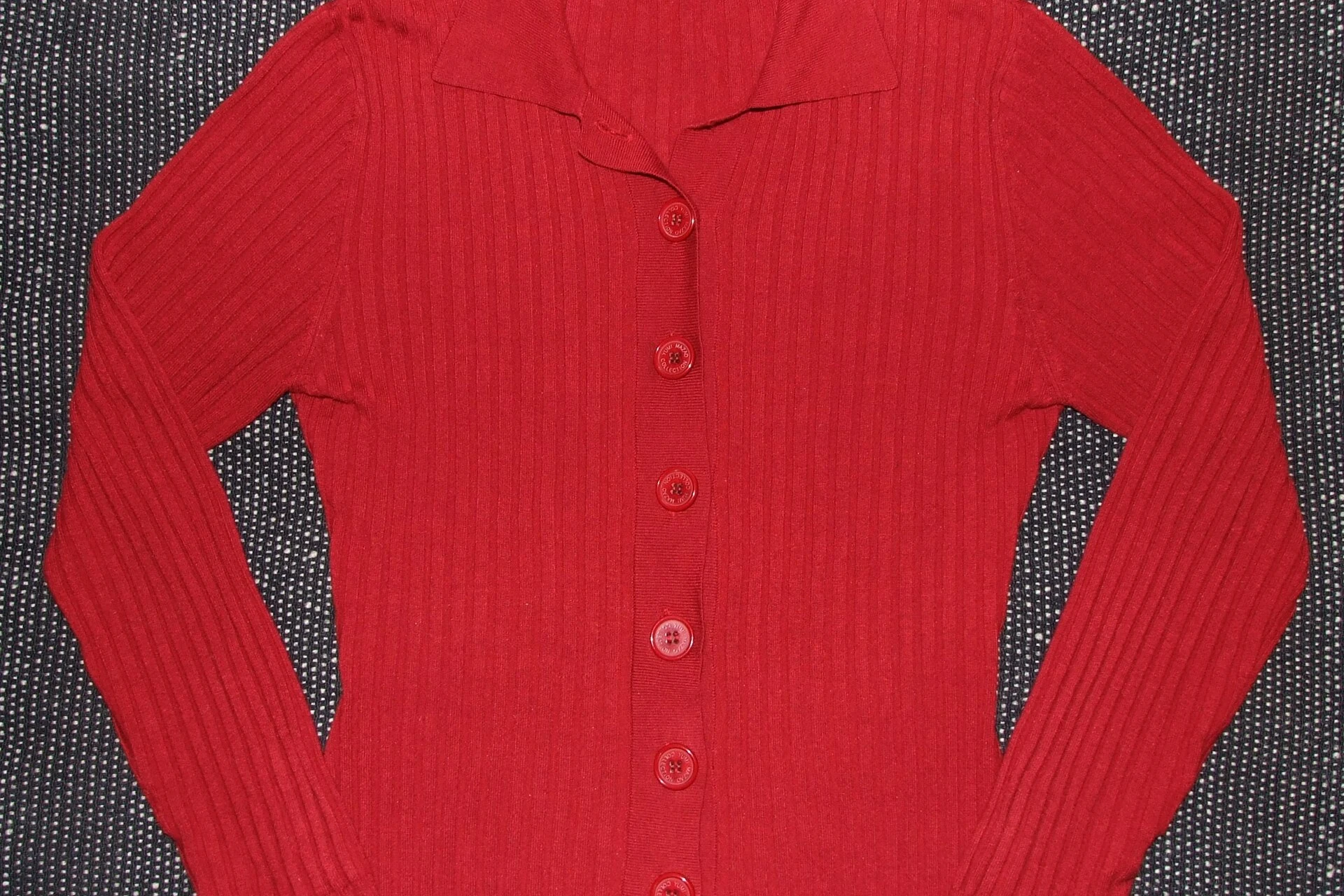

Write “chest width: 52 cm, measured flat” rather than “medium” on your sweater reference card. The first note describes something you can compare. The second tells you only which label is sewn into that particular sweater.
A favourite sweater can be a useful reference for another purchase, provided you record how you measured it and what you like about the fit. This is a practical comparison exercise, not a sizing formula. Two knits with matching dimensions may still feel different because their stretch, shape and construction differ.
Start with a sweater whose fit you can describe
Choose a sweater you have worn enough to judge. Put it on and write a short fit note before reaching for the tape: “comfortable over a shirt, sleeves reach my wrists, hem sits where I want it.” That note defines the result you are trying to repeat.
Do not automatically choose your largest or newest knit. A roomy weekend sweater may be a poor reference for a closer-fitting layer under a jacket. If you want both shapes, make two cards with different names rather than averaging their dimensions.
Lay the sweater on a flat surface with its front facing upward. Arrange it in its natural shape, with no deliberate stretching. Smooth obvious folds gently, and note if the garment will not lie evenly. Use the same unit throughout the card.
Record its current condition too, such as “worn since last wash” or “clean and dry.” This does not require washing it specially. It simply helps you remember what you measured.
Give every measurement a start and finish
For this home comparison method, measure chest width straight across the body between the underarm points. Keep the tape flat rather than following folds. Record the result as a flat width, not as your chest measurement.
Measure body length from the high shoulder point beside the neckline to the bottom hem, noting whether you used the front or back. If the back hem is longer, record that separately. Do not include the height of a standing collar in this length.
Where clear shoulder seams exist, measure shoulder width across the back from seam to seam. Measure sleeve length from the shoulder seam to the cuff edge. Include the cuff, and say so on the card.
Raglan sleeves and dropped shoulders complicate comparisons. A sleeve measured from a dropped seam cannot be treated as equivalent to one measured from a seam at the shoulder. For a raglan sweater, you might instead record neckline-to-cuff length, naming the exact starting point. Compare that only with an equivalent measurement.
Build a card you can repeat
The figures below describe an imaginary reference sweater. They are not recommended dimensions or a size chart. Replace them with your own measurements and keep the method notes attached.
| Field | Example entry | Method note |
|---|---|---|
| Fit purpose | Relaxed over a shirt | Not intended as a close-fitting base layer |
| Chest width | 52 cm | Underarm to underarm, unstretched |
| Front length | 64 cm | High shoulder beside neck to hem |
| Shoulder width | 43 cm | Across back, seam to seam |
| Sleeve length | 59 cm | Shoulder seam to cuff edge |
| Hem width | 45 cm | Straight across ribbing at rest |
Measure each dimension again after lifting and repositioning the tape. If the readings differ, check your endpoints and whether you moved or stretched the knit. Record a sensible reading rather than implying precision your setup cannot support.
A quick sketch can be more useful than extra numbers. Draw the measurement lines and label the endpoints, particularly around an unusual neckline or curved hem.
Compare like measurements, then examine the shape
First establish whether a seller’s chart describes the garment or the wearer’s body. A body-chest range is not directly comparable with an underarm-to-underarm flat width. Doubling a flat width gives an approximate around-garment figure, not a body measurement or a guaranteed fit.
Check the seller’s measuring diagram before comparing lengths. If its sleeve starts at the centre back of the neck and yours starts at a shoulder seam, the two numbers answer different questions. Ask for clarification rather than subtracting them.
Suppose a candidate sweater lists a 55 cm flat chest and a 60 cm front length using your methods. Against the example card, it is 3 cm wider across the chest and 4 cm shorter. That describes a wider, shorter outline; it does not prove the sweater will feel better or worse.
Look separately at ribbing, shoulder position and overall silhouette. Do not stretch your reference sweater until its measurements match a listing. That changes the comparison from its resting shape to an unrecorded amount of tension.
Use the numbers to narrow the choice
Mark each candidate measurement as similar, intentionally different or unresolved. “Intentionally shorter” can be a good result if that is what you want. “Sleeve method unknown” should remain unresolved rather than becoming a guessed match.
This card cannot predict texture, how a neckline feels or every effect of knit stretch. It is most useful for spotting differences worth investigating before ordering, not for assigning a universal size to your body.
Once you have chosen, verify the size and colour in your cart. Keep the reference card for the next comparison, updating it if your preferred fit changes rather than treating one sweater as a permanent standard.
How to Size a Tablecloth for Everyday Meals and Occasional Guests
Measure the tabletop, calculate the drop, then test it with someone seated. This practical sizing method covers everyday and extended tables, including chair…
What Size Rug Fits Your Seating Area Without Blocking Doors?
Compare two rug footprints on your own floor before choosing a size. This worked exercise checks sofa legs, chair positions, walking routes and…
How to Check Jacket Fit Over the Layers You Actually Wear
A jacket can look roomy yet feel restrictive once fastened over a sweater. Use a layer-by-layer try-on and a short movement checklist to…