What Size Rug Fits Your Seating Area Without Blocking Doors?
Compare two rug footprints on your own floor before choosing a size. This worked exercise checks sofa legs, chair positions, walking routes and door movement, with a worksheet you can reuse.
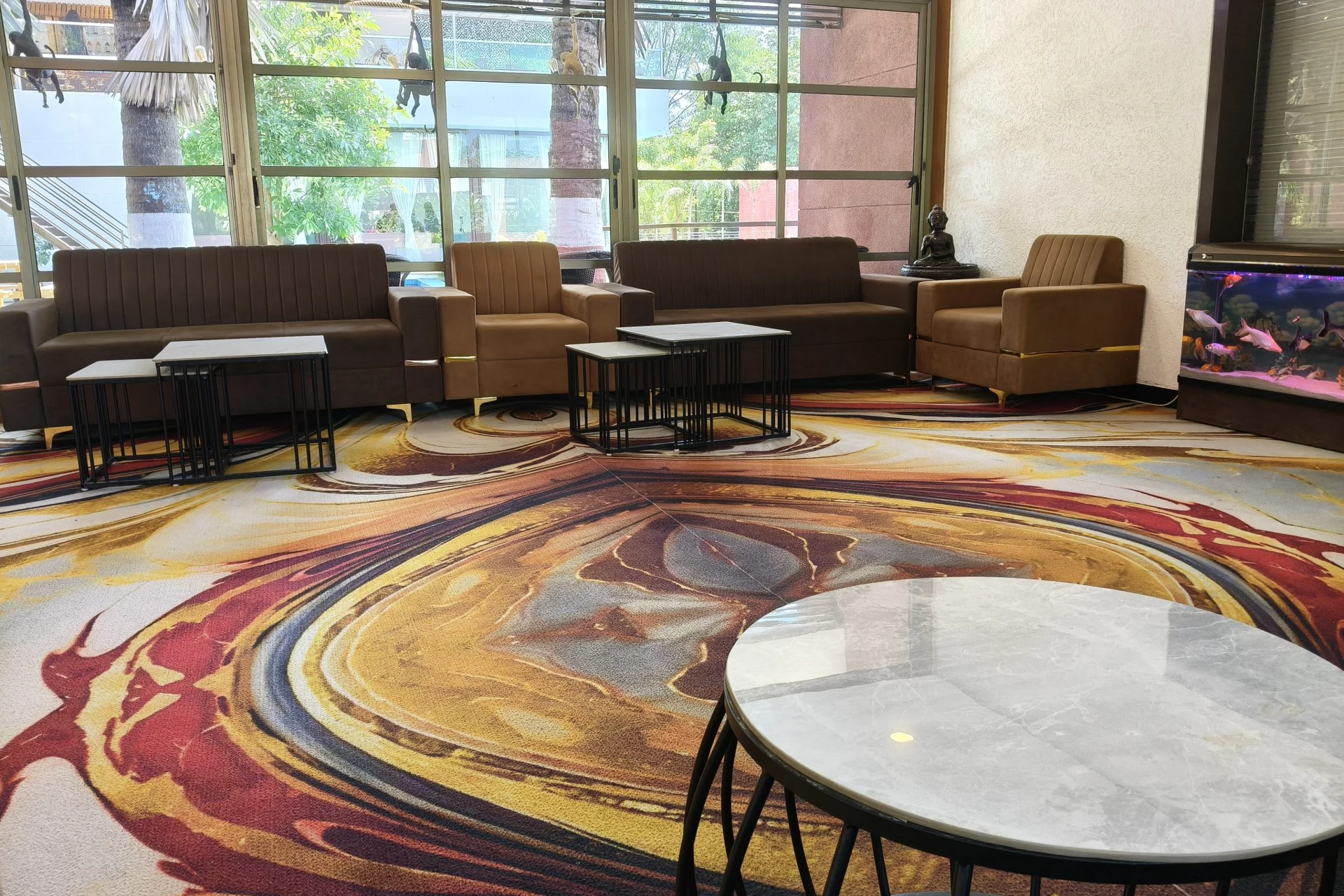
Mark a 160 × 230 cm rectangle on the floor, then a 200 × 300 cm rectangle around the same seating area. The difference becomes useful when you put the furniture back into its everyday positions: one outline may leave an armchair outside the rug, while the other reaches into a doorway.
Those dimensions are illustrative comparison sizes, not recommendations for every living room. The aim is to find a rug footprint that works with your furniture and the way you move through the room. You can make that decision with a tape measure, removable markers suitable for your floor and a short record of what each outline changes.
1. Map the seating area as you actually use it
Start with the sofa, coffee table and chairs in their normal positions. Include the side table you reach for and the chair that turns toward the television. A rug measured around furniture pushed aside for cleaning tells you little about the arrangement you want to keep.
Sketch the room from above. Mark doorways, the direction each door opens and the route between entrances. Add any cupboard or cabinet door that swings toward the seating area. Measure the furniture footprint separately from the empty floor around it.
Choose what you want the rug to include. You might prefer the sofa’s front feet and both feet of an occasional chair on it. You might want the whole sofa on the rug. These are styling choices to test, rather than rules that every room must follow.
If the sofa itself is still undecided, resolve its position and dimensions first. The guide to buying a sofa online and checking delivery covers another fit question that needs settling before the room arrangement becomes fixed.
2. Mark two footprints from the same reference point
Choose a reference point, such as the midpoint of the sofa’s front edge. Center both candidate outlines on that point so you can see what the extra width and depth actually add. Label the corners A and B instead of relying on two nearly identical outlines.
Use removable markers only if they are suitable for the floor finish. Paper corner markers can show a footprint without outlining every edge. Keep them out of walking routes while you measure, and remove the markers when the exercise is finished.
For this worked example, imagine a 220 cm sofa, a coffee table and an armchair beside an inward-opening door. Candidate A is 230 cm across the sofa and 160 cm deep. Candidate B is 300 cm across and 200 cm deep. Stating the orientation matters: rotating either rectangle creates a different arrangement.
Move each proposed edge deliberately. Centering is a starting choice; shifting a rug toward the armchair may suit the grouping better. Record that shift so you can reproduce it later.
3. Compare leg positions and usable floor
In this illustrative room, the smaller outline takes the sofa’s front feet but misses the armchair’s feet. The larger outline includes both, yet reaches across part of the door’s swing. Neither result alone decides the purchase: the next step is to see whether repositioning the rug or chair solves the conflict.
| Check | A: 160 × 230 cm | B: 200 × 300 cm |
|---|---|---|
| Sofa front feet | Inside the outline | Inside the outline |
| Armchair feet | Outside the outline | Inside the outline |
| Door swing | Does not cross the outline | Crosses one corner |
| Next action | Try moving the chair closer | Try shifting the footprint away from the door |
Check the furniture from seated positions as well as from the doorway. Decide whether the visible border feels balanced to you. If you move a chair to make the outline work, sit in it and check that the new position still suits conversation and access to the table.
4. Test the door separately from the outline
Open each nearby door through the range you normally use. Watch where its lower edge passes over the proposed rug footprint. A flat floor marker shows overlap, but it cannot establish whether the door will clear a real rug.
Where there is overlap, measure the gap beneath the door along that part of its movement. Compare it with the proposed rug and any underlay together. Include the edge or binding in your assessment; do not assume that a listed pile measurement describes every part of the finished rug.
If the dimensions leave the result uncertain, choose a footprint outside the swing or inspect the actual rug before committing. Do not treat a taped outline as proof of vertical clearance. This exercise also cannot tell you how a particular rug will settle or how easily furniture will move across it.
5. Keep a decision card for the final size
Write a short card for the arrangement you prefer. Include the rug dimensions, orientation, distance from the sofa, intended leg positions and any door overlap. Add a sketch showing the corners relative to furniture that will remain in place.
- Preferred footprint: width across the sofa × depth into the room.
- Placement: distance from a fixed wall or the sofa’s front edge.
- Furniture included: name the feet intended to sit on the rug.
- Movement check: doors opened and usual routes walked.
- Unresolved check: actual rug and underlay thickness, if relevant.
If neither candidate works, measure the acceptable boundary directly and compare another size against it. Keep the successful layout marked on your sketch, even if that means choosing a smaller rug and moving the armchair slightly. The useful result is a repeatable placement that accommodates the room you use.
How to Size a Tablecloth for Everyday Meals and Occasional Guests
Measure the tabletop, calculate the drop, then test it with someone seated. This practical sizing method covers everyday and extended tables, including chair…
How to Check Jacket Fit Over the Layers You Actually Wear
A jacket can look roomy yet feel restrictive once fastened over a sweater. Use a layer-by-layer try-on and a short movement checklist to…
Measure a Sweater You Like to Make Better Size Comparisons
Use a sweater you already enjoy wearing to create a repeatable measurement card. Compare chest width, length and sleeves while keeping garment dimensions,…