Try a Rain Jacket With Your Daypack Before Deciding It Fits
A jacket can feel roomy until your daypack holds parts of it in place. Use your usual layers and a normally packed bag to compare sleeve reach, hem movement and access to everyday pockets.
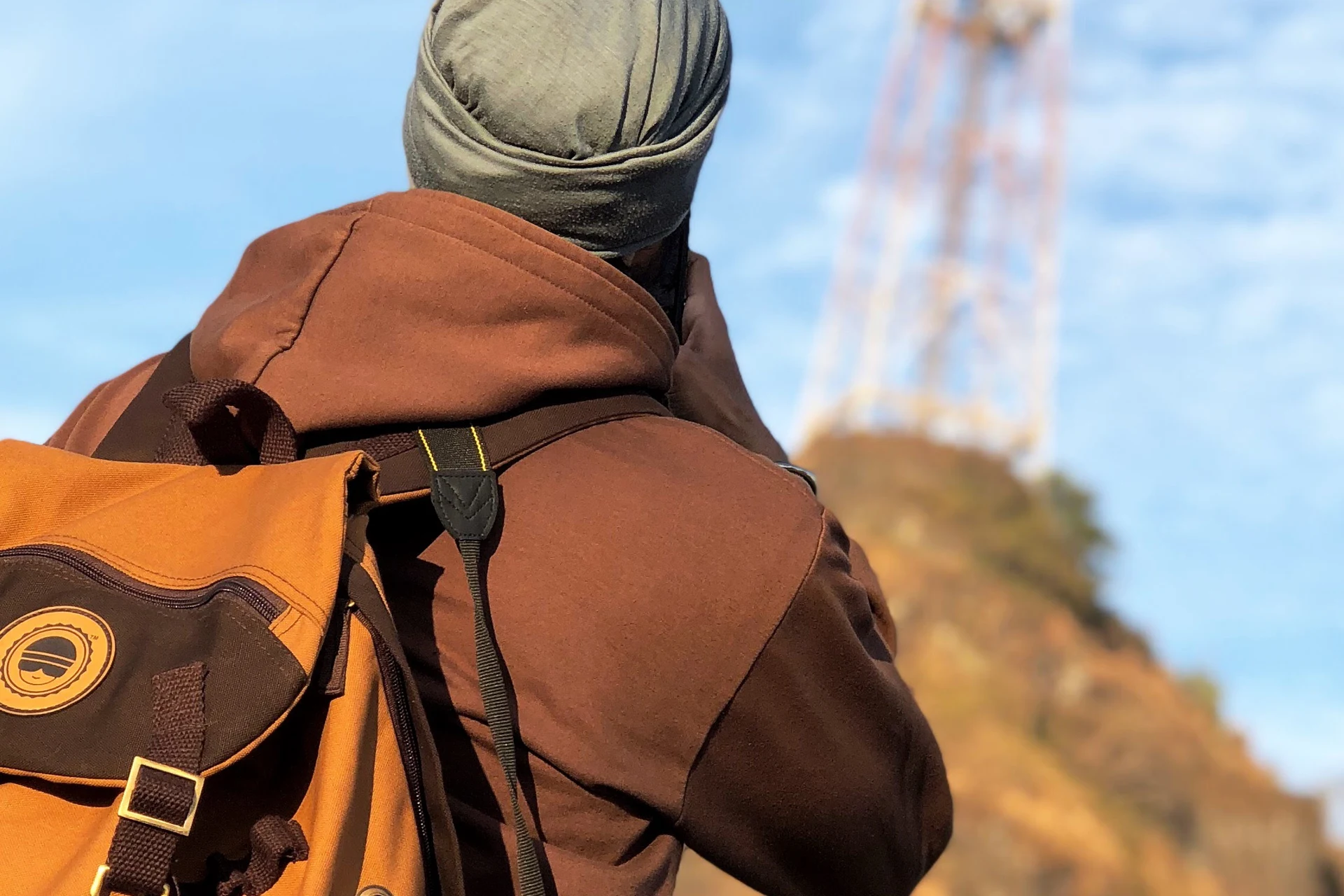
Zip your rain jacket, put on your usual daypack and reach forward as though opening a door. Notice what moves: the sleeve ends, the front hem, the collar or the whole jacket beneath the straps.
That observation is more useful than checking only whether you can close the zip. You are choosing a jacket to wear with another item, so try the combination before deciding that the fit works.
The exercise below is a practical comparison for everyday use. It evaluates garment movement and access, not how much weight you should carry, outdoor safety or waterproof performance. Use familiar movements and stop any action that feels uncomfortable.
Keep the pack and layers consistent
Wear the layers you expect to use beneath the jacket. If that means a shirt and light fleece, test those together rather than substituting a thin T-shirt simply because it makes the jacket feel roomier.
Pack your daypack with its usual contents, arranged as you normally carry them. Do not add extra weight to make the test more demanding. The point is to reproduce your own combination, not create an endurance challenge.
Use your normal strap setup. If you routinely fasten a sternum strap or a waist strap, include it; if you do not, avoid introducing it solely for the test. Record the setup so you can repeat it with another jacket.
Bring the actual bag where a shop permits it. At home, keep labels attached and follow any try-on conditions if you are still deciding whether to keep the jacket. The return-window checklist can help you record the relevant dates and conditions without assuming all sellers use the same rules.
Establish how the jacket moves without the pack
First try the jacket alone. Close the front as you normally would and set the cuffs and hem to a comfortable position. Stand naturally and note where the sleeve ends and hem sit.
Reach forward, bend your elbows, turn your head and sit down on an ordinary chair. These movements create a baseline. If the jacket already pulls across your shoulders without the daypack, record that separately from anything that happens under straps.
Use visible reference points rather than an invented ideal measurement. You might note that a cuff starts at your wrist crease or that the front hem covers the waistband of your trousers. Your aim is to compare the same jacket before and after adding the bag.
Do not assume a longer hem or wider body automatically solves every issue. Keep the initial observations specific enough to test: “Front hem rises when I reach” is more useful than “Needs a bigger size.”
Record what changes under the straps
Put the daypack on without deliberately pulling the jacket into an unusually tidy position. Repeat the same movements, then make one normal adjustment if needed. Record whether the adjustment lasts or whether you repeatedly have to free the fabric.
| Check | Without pack | With pack | Your decision |
|---|---|---|---|
| Forward reach | Cuff and hem starting points | Where fabric pulls or shifts | Acceptable or needs comparison |
| Head turn | Collar and hood feel | Any new pulling or restriction | Acceptable or needs comparison |
| Sitting | Front hem and zip position | Bunching or fabric held by straps | Acceptable or needs comparison |
| Pocket access | Can you reach the opening? | Does a strap cross the opening? | Useful in your routine or not |
| After removing pack | Original jacket position | Does it settle or need resetting? | Occasional or repeated adjustment |
Distinguish fabric movement from discomfort. A hem moving slightly may not bother you; having to tug it down after every reach may. Your decision should reflect the actual task and your tolerance, not a requirement that the garment remain motionless.
Test the features you use while carrying the bag
Try opening the pockets you expect to use, without forcing a zip beneath a strap. A pocket can be easy to reach with the jacket alone and awkward in your particular bag setup. Decide whether you need access while wearing the pack or normally remove it first.
Put up the hood if you expect to use it. Adjust it normally, then turn your head and look down. Note whether the pack changes how the collar or hood feels. This is a movement check, not proof of weather protection.
Check the cuffs in the position you actually wear them. If you use gloves, you can include your usual pair to judge the arrangement, but avoid changing several adjustments simultaneously.
For a new jacket, leave rain testing outside this fit exercise.
Compare one variable and make a usable decision
Consider this illustrative result: without the bag, a jacket allows an easy forward reach. With the bag, its sleeves pull back and the front hem stays raised until the wearer frees fabric beneath the straps. Pocket access remains fine.
The next step is not automatically to size up. Repeat the movement once with the same setup to check the observation. Then compare another size or cut while keeping the pack, contents and layers unchanged. Record whether the alternative resolves the pulling without introducing a different fit problem.
A short final note is enough: “Works with my normal layers and daypack; pockets accessible; hem needs no repeated adjustment.” Or: “Comfortable alone, but needs resetting after forward reaches with this bag.”
If the bag itself is still undecided, evaluate its everyday role separately using the commuting bag route test. Changing the bag and jacket together makes this comparison harder to interpret.
Keep the setup note with your decision. A fit you like with one light layer and one daypack is evidence about that combination—not a promise that every future layer or bag will work equally well.
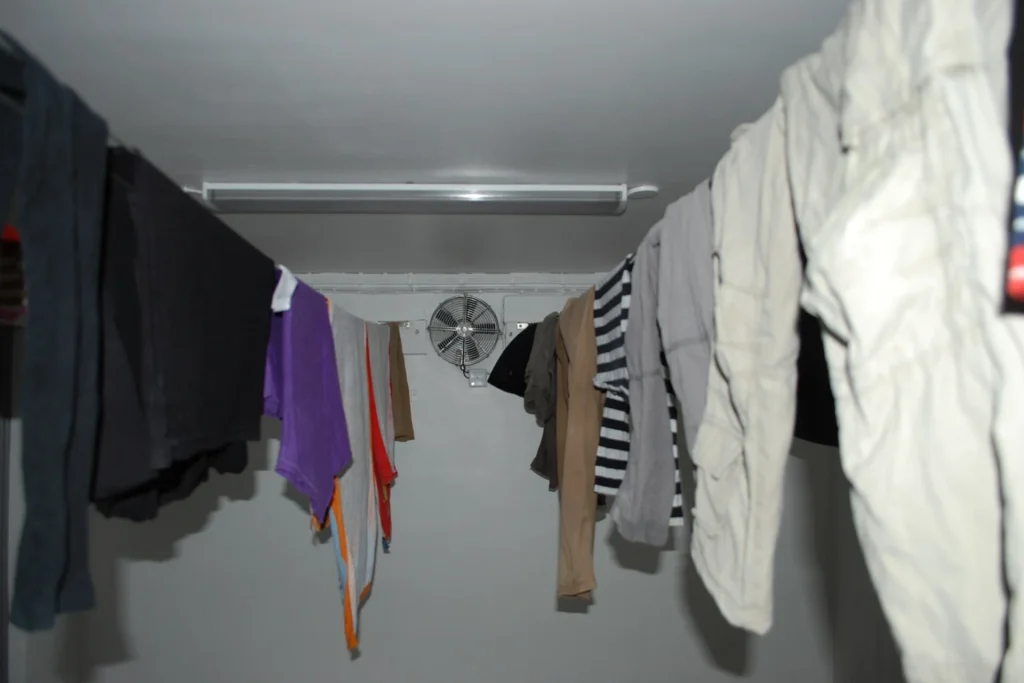
How to Dry Damp Outdoor Clothing in a Small Room
Set up a temporary drying zone that contains drips, keeps garments apart and preserves a usable walking route. Follow each care label, then…

How Many Clothes to Pack When You Can Wash Partway Through a Trip
A mid-trip wash only reduces packing if clothes are ready when you need them. Use a six-day wear-and-wash grid to count outfits, allow…
Keep Damp and Dirty Clothes Separate During a Short Trip
Use three clearly marked places for clean, dry-worn and damp clothing. Add a visible reminder for temporarily contained wet items, then unpack in…