How Many Clothes to Pack When You Can Wash Partway Through a Trip
A mid-trip wash only reduces packing if clothes are ready when you need them. Use a six-day wear-and-wash grid to count outfits, allow for drying overlap and choose a modest, clearly defined reserve.


For a hypothetical six-day trip, pack four everyday tops: three assigned to the first three days and one held in reserve. Wash the first two after day two, but do not schedule either for day three. That third unworn top is what makes the wash plan usable without depending on overnight drying.
This is an illustrative calculation, not a universal four-top packing rule. It assumes one top per day, compatible care instructions and a usable washing opportunity. Change any of those conditions and the count may change.
Count until clothes are ready, not until wash day
The important interval runs from your first wear to the next moment washed clothes are actually available. A wash on Tuesday evening does not automatically provide Wednesday morning’s outfit.
Use this working model for each clothing category: planned wears before reliable reuse, plus a chosen reserve. Where you intend to wear an item more than once before washing, mark those wears explicitly. Do not silently assume every category follows the same pattern.
Count tops, underwear, socks, trousers and activity-specific clothing separately. An extra top does not cover a shortage of socks. A dinner outfit also cannot replace a planned walking outfit unless you would genuinely choose to wear it for that activity.
Begin with the calendar, including arrival and departure days. If you change clothes after travel, count that change. If you expect to repeat an outfit, write down which one so the repetition is a deliberate preference rather than a missing item.
Use a six-day wear-and-wash grid
Here is the four-top example in full. Tops A, B and C form the planned rotation; R is the reserve. The schedule intentionally leaves day three independent of laundry. Later reuse remains conditional on clothes being ready.
| Day | Planned top | Laundry action | Availability check |
|---|---|---|---|
| 1 | A | Set aside after wear | B, C and R remain unworn |
| 2 | B | Wash A and B after wear if the planned method is available | C is assigned to day three; R stays spare |
| 3 | C | Continue permitted drying as needed | No reliance on A or B today |
| 4 | A, only if ready | Check actual condition before wearing | Use R if the planned top is unavailable |
| 5 | B, only if ready | No additional wash assumed | Reassess if R was already used |
| 6 | C again, if you choose to rewear it | No wash assumed | Otherwise assign unused R or add another top before departure |
The last row matters. Four tops cover this example only because day six includes a chosen rewear or an available reserve. If you want a freshly washed or unworn top every day without using the reserve in the planned rotation, add a fifth top or arrange another workable wash.
The grid exposes that choice before departure. It also shows that a reserve can only solve a limited disruption; it cannot rescue an indefinitely delayed wash.
Give the wash a realistic route through the trip
Write down what must be available: a permitted washing method, suitable detergent, any required rinsing and an acceptable drying arrangement. “Laundry available” is too vague if you do not know whether the process fits the clothes you are counting on.
For instance, GORE-TEX outerwear guidance specifies care details including liquid detergent, a second rinse and minimized spinning, while also requiring attention to the garment manufacturer’s instructions. Do not treat a planned everyday-clothing wash as automatic capacity for specialist outerwear.
A late arrival, early departure or move between accommodation can remove the window you intended to use. Put the wash on the same itinerary as your other commitments. The approach in planning time between booked activities is relevant here: laundry needs an actual opening, not leftover time that is already spoken for.
Size the reserve around a named interruption
Choose what your spare is meant to cover. In the example, R covers one unavailable planned top, whether because laundry is delayed or another top needs changing. It is not simultaneously reserved for both events.
Test the calendar by crossing out the wash. Can you still dress for the remaining days through acceptable rewearing, another confirmed opportunity or additional packed clothes? If not, decide whether the wash is reliable enough to support the smaller count.
Repeat the test for categories you would not choose to rewear. A minimal top rotation says nothing about the underwear quantity you need. Personal wear choices belong in the arithmetic, not in a supposedly universal packing formula.
Turn the grid into a final packing list
Before closing the bag, complete one line per category:
- Wear demand: number of planned changes and deliberate rewears.
- First reuse: when washed items must actually be ready.
- Wash group: the named garments with compatible instructions.
- Reserve: the extra quantity and the interruption it covers.
- Fallback: what changes if the wash cannot happen.
Count clothes already worn for departure as part of the total, while distinguishing them from items inside the bag. Check that the reserve has not also been assigned to an ordinary day.
Only then allocate compartments or choose an organizer for your existing travel bag. The calendar determines the clothing quantity; the organizer simply gives that quantity a place.
Sources and editorial notes
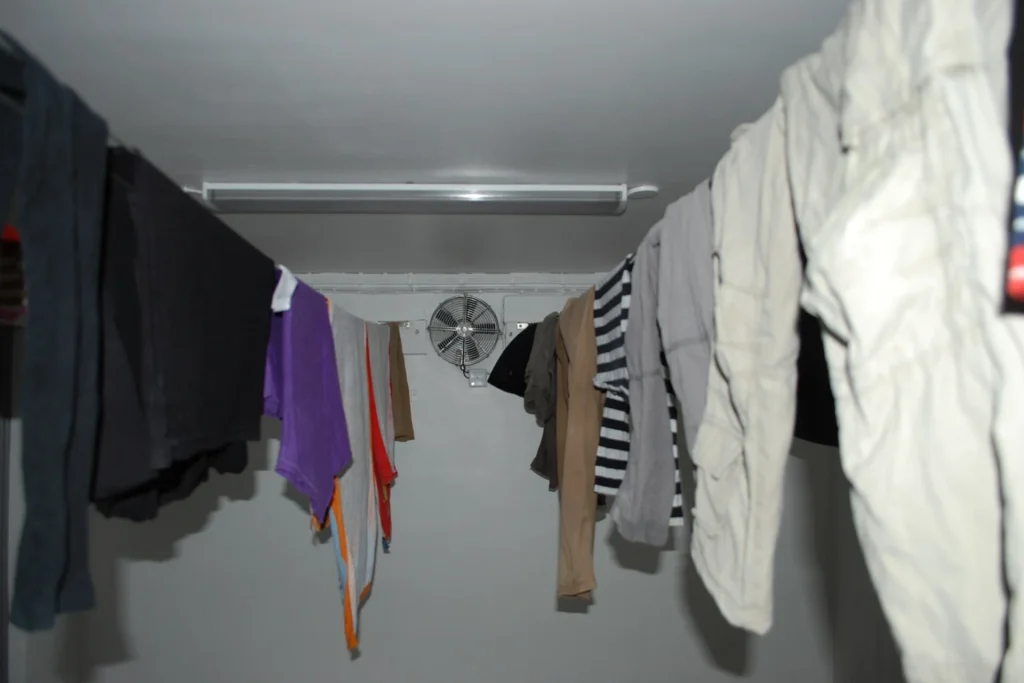
How to Dry Damp Outdoor Clothing in a Small Room
Set up a temporary drying zone that contains drips, keeps garments apart and preserves a usable walking route. Follow each care label, then…
Try a Rain Jacket With Your Daypack Before Deciding It Fits
A jacket can feel roomy until your daypack holds parts of it in place. Use your usual layers and a normally packed bag…
Keep Damp and Dirty Clothes Separate During a Short Trip
Use three clearly marked places for clean, dry-worn and damp clothing. Add a visible reminder for temporarily contained wet items, then unpack in…