Inspect Secondhand Clothing: Separate Cosmetic Wear From Repair Work
A faded cuff and a failing closure ask different questions. Use a simple defect map to inspect secondhand clothing, record uncertainty and decide what you can accept without relying on promised repairs.
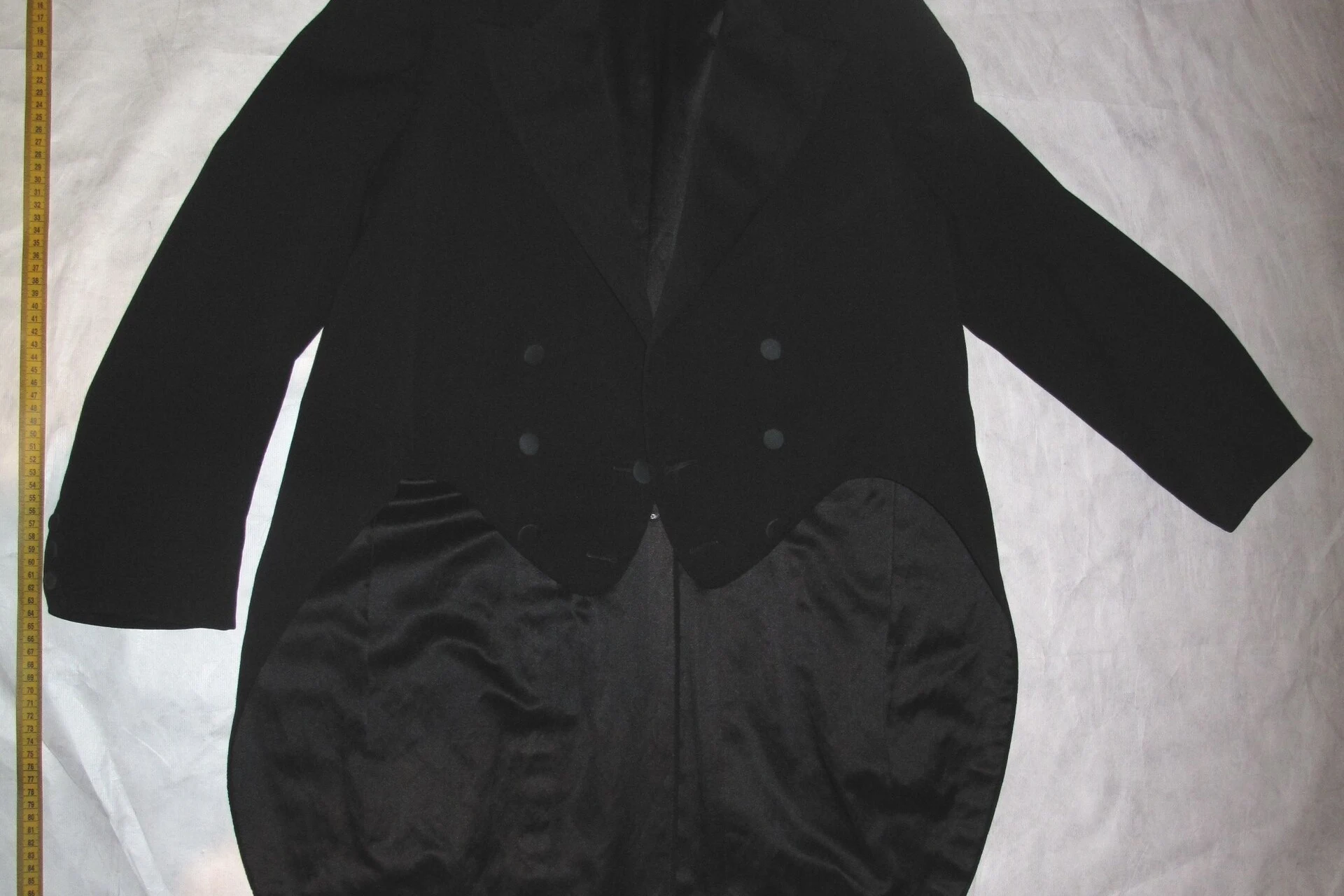

A secondhand jacket has a faded cuff, an open section of pocket stitching and a front zip that catches halfway up. Record three separate observations. Calling the whole jacket “a little worn” hides the decision you need to make.
The faded cuff may be acceptable as it is. The pocket needs closer examination. The zip may make the jacket unsuitable for you unless its condition is clarified. None of those decisions requires guessing a repair price.
Use an accept, investigate or decline system. Accept means you can use the garment in its present condition. Investigate means you need a specific answer before deciding. Decline means the present condition or unresolved uncertainty does not suit your needs.
Inspect the whole garment before focusing on one flaw
Begin with the garment laid out or hanging freely, with permission to examine it. Look at the front, back, inside and edges. Note any areas you cannot see clearly rather than treating them as checked.
Find the care and identification labels if present. Record missing or unreadable labels as an information gap, especially when you are considering technical outerwear. Do not assume that a similar-looking garment has the same care requirements.
For GORE-TEX outerwear, GORE specifically says to follow the garment manufacturer’s instructions. Its guidance also distinguishes ordinary outerwear care from special care for persistent-beading-surface garments such as GORE-TEX SHAKEDRY. A generic promise to “wash and reproof it” is therefore not enough to settle every technical-jacket purchase.
Next, identify your intended use. A pocket you will never use and a front fastening you need every day deserve different attention. Avoid letting an attractive color or familiar label substitute for this condition check.
Make a defect map with four inspection areas
Use the following map in person or as a request for seller photographs. Describe what is visible before naming a cause. “Threads are loose beside the pocket” is more defensible than “an easy sewing repair.”
| Area | What to inspect | What to record |
|---|---|---|
| Seams | Outside and inside joins, including pockets and lining | Loose thread, opening, adjacent fabric damage or unclear view |
| Closures | Zips, buttons, snaps and other fastenings | Whether each operates gently; missing or visibly damaged parts |
| Fabric | Cuffs, elbows, seat, knees and other visibly worn areas | Fading, fuzzing, holes or areas that appear thinner |
| Marks | Stains, discoloration and their boundaries | Location, size and whether you accept them unchanged |
Compare a questionable area with a less-worn area of the same garment where possible. You are looking for differences, not performing a strength test. Do not pull apart seams, stretch fragile patches or force stuck hardware.
On technical outerwear, also look inside for visibly lifting tape or separating layers. Record their location and appearance. A visual inspection alone should not become a claim that the garment is waterproof or that the problem has a straightforward remedy.
Separate appearance from function and unknowns
A cosmetic flaw is one you can accept without needing it removed or repaired. That makes acceptance personal: a permanent-looking mark on a gardening shirt may be fine for you and unsuitable for someone seeking office clothing.
Fabric wear needs a more cautious description. Fading is an appearance change; an area that looks thin raises a different question. If you cannot tell whether the fabric is intact, keep it in the investigate category rather than calling it cosmetic.
Operate closures gently through their normal movement. Check all the buttons you expect to use, not just the top one. If a zip catches, stop rather than forcing it and ask for clarification or a demonstration.
Keep cleaning and repair separate. Cleaning instructions do not establish that a split seam, damaged fastening or thinning fabric can be restored. Arc’teryx provides different home-wash guidance by product type, reinforcing the need to identify the actual garment rather than apply one care routine to everything.
Ask questions that could change your decision
For an online listing, request one overall photograph and a close view of each uncertain area, including the reverse where accessible. Ask the seller to identify the exact location so the close-up does not become a disconnected patch of fabric.
Use narrow questions: “Does the front zip travel fully in both directions without being forced?” or “Can you show the inside of the open pocket seam?” These are more useful than “Is it in good condition?”
Treat stain removal as uncertain. GORE’s guidance for its outerwear advises against stain removers and gives specific alternatives; that advice is not a cleaning recipe for all secondhand clothing. Buy a marked garment only if its present appearance is acceptable or you are prepared for the mark to remain.
Check transaction limits separately. The return-window checklist offers a useful record format, but you still need the terms for this particular seller and item. Do not assume an inspection opportunity exists after purchase.
Make the decision without an imagined repair
Return to the illustrative jacket. Suppose the cuff is faded but intact, the pocket seam has an opening whose surrounding fabric is unclear, and the zip still catches during a gentle demonstration.
- Accept the cuff: you like the jacket even with the fading.
- Investigate the pocket: request a clear inside view; if necessary, seek an assessment from someone qualified to evaluate garment repairs.
- Decline over the zip: you need dependable front closure now and do not want an unresolved repair project.
Those decisions can coexist. You do not need to prove that the jacket is beyond repair to decide against buying it.
Before committing, write one sentence: “I am buying this in its current condition, including ___.” If the sentence instead depends on a stain disappearing, a closure being replaced or fabric becoming stronger, the purchase still rests on an unanswered question. Resolve that question or leave the garment behind.
Sources and editorial notes

Lumens or Watts: Which Number Helps You Replace a Bulb?
Lumens describe light output; watts describe energy use. Read a worked packaging example, use a brightness reference table and keep fixture compatibility as…
Choosing a Photo Frame: Check More Than the Outside Dimensions
The stated frame size does not tell you how a photograph will be supported or what will touch it. Check the opening, mat,…

Choose Folders for Important Paper Without Relying on the Word ‘Archival’
Choose folders by their stated materials, support and usable size. This guide explains what to verify beyond an archival label, with a worked…