Where Should a Mirror Go? Check the Reflection First
An empty wall is only half the mirror decision. Compare what you would see from the sofa, doorway and main walking route with a simple sightline sketch before choosing a position.
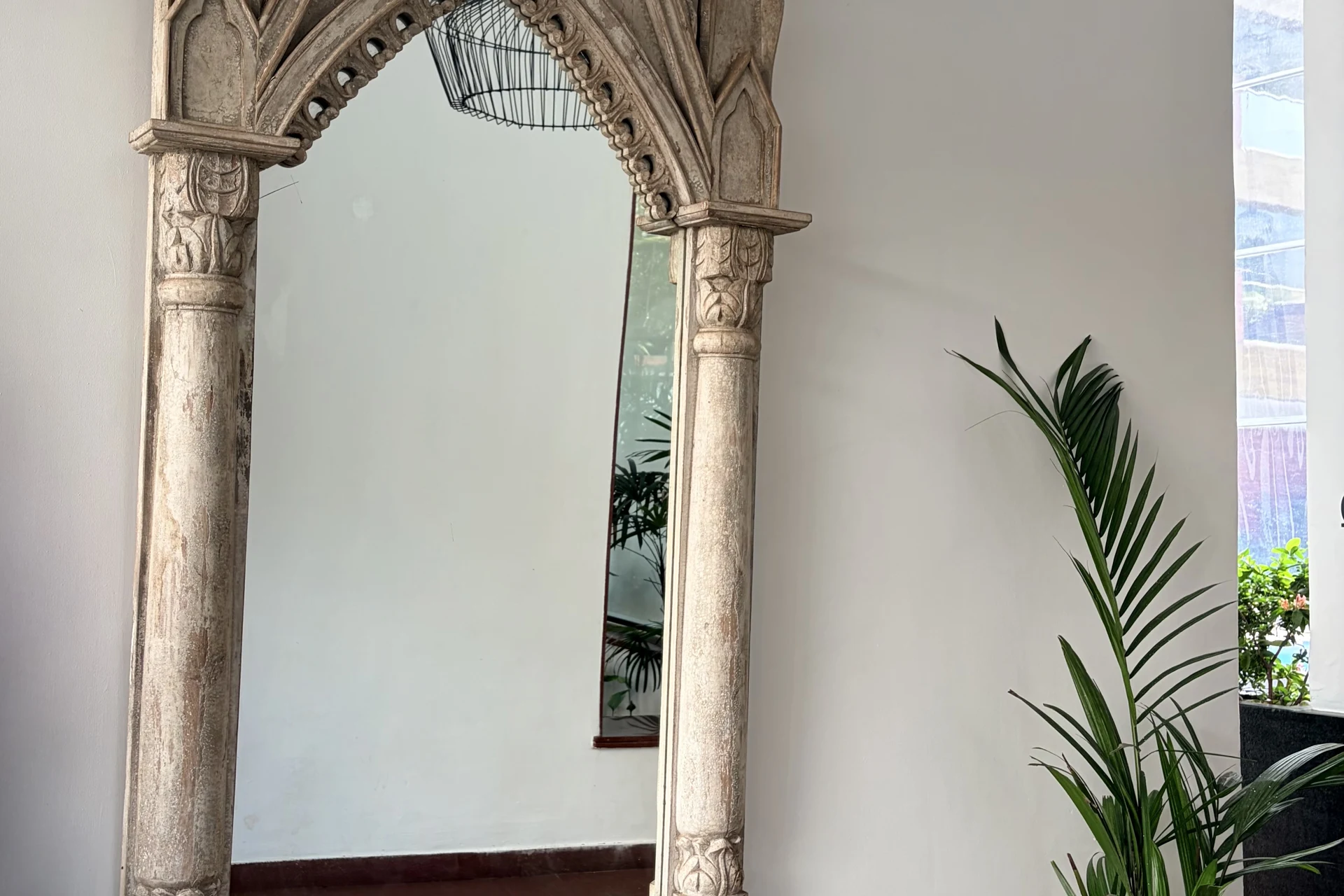
From the sofa, a proposed mirror might frame the window. From the doorway, the same position might show the coat rack. Mark both views on a room sketch before deciding that the empty wall is the right wall.
A useful mirror position has to work from the places where you will see it. The exercise below compares two possible locations using everyday viewing positions. It helps you choose the reflection you want; mounting methods, wall fixings and installation are separate decisions.
Choose three places to judge the reflection
Start with one seated position, one standing position and one point on a normal route through the room. For a living room, those might be your usual sofa seat, the doorway and the passage beside the dining table. Use the places you actually occupy, even if they produce less flattering views than a photograph taken from the corner.
Give each point a letter on a rough floor plan. Draw the main furniture and openings, then label two candidate mirror positions A and B. You do not need a polished drawing. You need enough detail to connect a viewing position with a possible reflection.
Write one priority beside each viewing point. At the sofa, perhaps you want a quiet composition. At the doorway, you may prefer a view of a picture. Along the walking route, you might simply want to avoid repeatedly seeing an untidy shelf.
These are personal choices. There is no requirement to reflect a window, an artwork or the largest possible portion of the room.
Make a seated-and-standing sightline sheet
Use a separate row for every combination of viewing point and candidate wall. Record what you expect to see, then mark it as unconfirmed until you have checked it in the room. A floor plan is a planning aid; it does not show the finished reflection by itself.
| Viewing point | Position A | Position B | Household priority |
|---|---|---|---|
| S: seated on sofa | Window and curtain edge | Bookcase and picture | Prefer the picture |
| D: standing at doorway | Coat rack | Part of the window | Avoid the coat rack |
| R: beside dining table | Sofa back | Open shelf | Check shelf during normal use |
Under the table, leave space for a simple note: “Chosen position: __. Most important view: __. Remaining check: __.” This forces the decision to name its priority instead of accumulating unrelated decorating preferences.
If two people use different sofa seats, give those seats separate rows. Their views should be assessed separately rather than folded into one general impression of the seating area.
Check the proposed view without treating a mock-up as proof
A paper outline can help you judge how much wall space a mirror would occupy. It cannot show the reflection. Keep those two checks separate on your sheet: wall composition and reflected view.
If you already have a mirror securely installed in a candidate location, observe it from your marked positions. For a new location, use your sketch to narrow the options and arrange a suitable preview before committing. Do not improvise a temporary setup with a heavy or unsecured mirror just to complete the exercise.
From each point, record recognizable objects rather than broad impressions. “Upper half of bookcase, picture and doorway edge” gives you something to evaluate. “Looks bigger” leaves the actual composition unclear.
Repeat the check while seated and standing where relevant. If photographs help you remember the options, label them with the viewing point. Judge the result in person as well; a single chosen camera position cannot represent every place you use.
Work through a choice with an imperfect view
In the example sheet, position B wins from the sofa and doorway. Its weaker view is the open shelf seen from beside the dining table. Suppose the household passes that spot often, but rarely pauses there. They might accept that reflection because the sofa view matters more to them.
Another household might make the opposite choice because the dining area is where they spend the evening. The table supports either decision. Its purpose is to expose the tradeoff.
Before moving furniture to improve one reflection, check the ordinary use of that furniture. A chair should still serve its seat and route through the room. If replacing the sofa is already part of the plan, resolve its practical placement alongside the considerations in this sofa-buying guide before treating its viewing point as settled.
Choose for the room you normally keep
Run the final comparison with the room in an ordinary state. Leave the everyday coat, book pile or dining chairs where they usually belong. You are choosing a reflection you will live with, so an unusually cleared room gives you an incomplete test.
Consider whether the preferred view depends on a temporary arrangement. A seasonal display may be a welcome bonus, but decide whether you also like the view after it is packed away.
Finish by circling one position and writing the reason in a sentence: “Choose B because the picture is visible from both sofa seats, and we accept the shelf view from the dining route.” Keep any unconfirmed sightline on the sheet for the final placement discussion. That is a more useful brief than “put it on the blank wall.”
How to Divide a Room With Furniture Without Blocking Everyday Routes
A sofa can define a seating area while a low sideboard gives dining its own edge. Trace three everyday journeys first, then test…

Open Shelves or Closed Storage? Sort by Access and Visual Clutter
Sort belongings by how often you retrieve them and how you feel about seeing them. A four-part matrix helps assign books, cables, serving…
Choose a Bedside Table by Usable Surface, Not Just Width
A lamp can claim much of a bedside table before your book, glasses and water arrive. Use paper footprints to test the remaining…