Toy Train Set Bundles: What Is Actually in the Box?
Buying a toy train bundle often leads to surprise missing parts on gift morning. Learn how to decode box contents, verify track and power components, check manufacturer compatibility labels, and calculate the real cost of expanding a starter set before you buy.
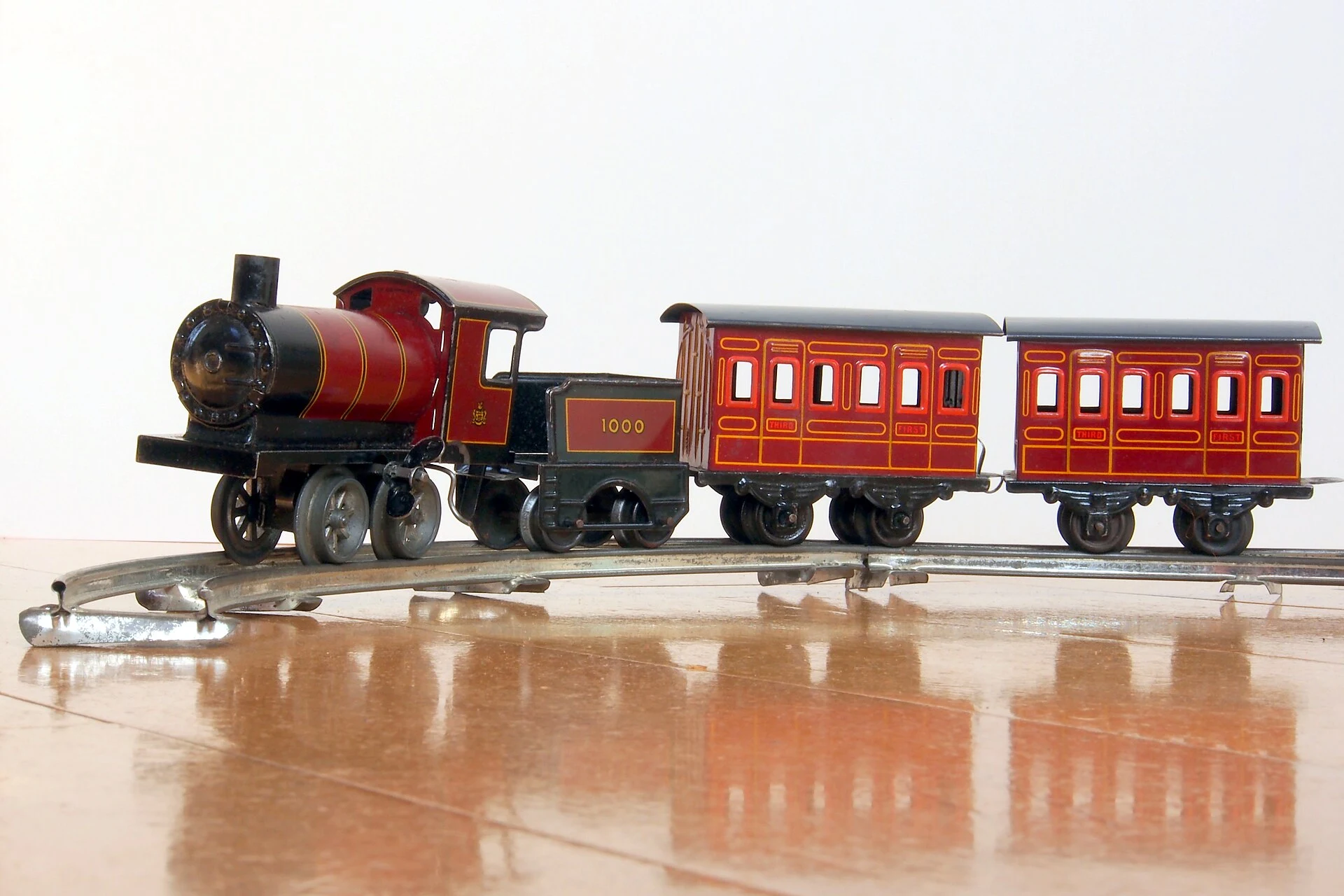

A toy train bundle rarely includes everything pictured on the front of the carton. To avoid an unplayable gift, buyers need to verify three specific manifest details before checkout: whether the track pieces form a complete closed loop, whether the propulsion system requires separate batteries or wall transformers, and whether the couplers and rails lock you into a single brand ecosystem.
Classic toy trains appear in Google’s November 9, 2026 Holiday 100 gift guide, which is based on shopping Search trends. Because search interest does not prove retail sales, product quality, or effectiveness, shoppers should rely on specification checks rather than seasonal popularity when evaluating starter sets.
Decoding the Box Manifest: Track, Power, and Controllers
Marketing photography often stages starter bundles inside elaborate miniature towns or across multi-loop layouts that require supplementary expansion packs. Instead of relying on box art, locate the exact parts manifest on the side panel or the manufacturer’s specification sheet.
Pay close attention to how pieces are counted. A box advertising a high piece count may pad that total with cardboard road signs, plastic trees, or multi-piece cargo loads while supplying only a minimal circle of track. Break the manifest down into three functional categories:
- Track Geometry: Check if the included curves and straights create a full loop or an oval. Some display sets only include a short straight section meant for a shelf. Also check whether the rails are bare sections or attached to a snap-together plastic roadbed, as the latter usually sits better on uneven living room rugs.
- Power Delivery: Determine what makes the locomotive move. Unpowered push-along sets rely entirely on hand movement. Battery-operated sets may require specific cell sizes in both the engine and the handheld remote, which are rarely included in the box. Electric scale models may require a dedicated AC/DC wall transformer and feeder wires; verify that the plug type and voltage match U.S. household standards if ordering from international storefronts.
- Control Mechanisms: Look at how the user interacts with the train. Basic sets use a physical switch on the engine chassis. Others include an infrared or radio-frequency handheld controller, while some modern bundles omit physical remotes entirely in favor of a companion smartphone app. If an app is required, verify exact operating system and device compatibility before purchasing.
Reading Manufacturer Age and Compatibility Labels
Evaluating whether a set fits your household requires looking strictly at official manufacturer labeling. We do not make independent child safety determinations; instead, shoppers should examine the printed age grading and statutory choking-hazard warnings on the packaging, which manufacturers assign based on small removable parts, pinching mechanisms, or electrical components.
Compatibility labels are equally important if the recipient already owns railway toys or hopes to build a larger layout later. There is no universal compatibility across toy trains. Even when two brands appear similar in size, small differences in wheel flange depth, rail height, or track connector clips can prevent them from joining cleanly.
Check the box for explicit system names, scale ratios, or gauge measurements. Wooden railway systems, interlocking plastic brick trains, and traditional metal-rail scale models each use proprietary or standardized coupling systems. If a brand claims cross-compatibility with other major systems, confirm whether that applies to both the track joints and the magnetic or hook-and-loop car couplers, or if you will need to buy third-party adapter tracks.
Calculating True Ownership and Expansion Costs
The upfront price of a starter bundle is only the baseline cost. A simple circle of track can feel repetitive quickly, and adding a single turnout switch, a bridge, or a few extra straight sections can easily match the price of the original bundle.
Consider a hypothetical comparison to see how total ownership costs shift depending on what is omitted from the main carton:
Hypothetical Example: Buyer A selects Bundle X, a motorized plastic set that includes an engine, two cars, and a basic oval of track, but omits the required batteries for the engine and remote, as well as any switching tracks. Buyer B selects Bundle Y, an unpowered wooden figure-eight set that includes a bridge and a mechanical track switch in the box. While Bundle X offers motorized motion, Buyer A must immediately purchase batteries and a separate track expansion pack to gain anything beyond a simple circle, whereas Buyer B has layout variety out of the box without ongoing power costs.
Pre-Purchase Bundle Audit Worksheet
Use this decision table to compare two or three candidate sets side by side using the retailer’s product description or a zoomed-in photo of the back of the box.
| Audit Category | What to Check on the Label | Impact on Day-One Use & Cost |
|---|---|---|
| Track Footprint | Assembled length and width dimensions; total curved vs. straight pieces. | Determines if the loop fits around a holiday tree or play table without buying extra straights. |
| Propulsion & Power | Push-along, battery count/type (engine + remote), or included wall transformer. | Identifies hidden day-one battery costs or missing power bricks required to run the train. |
| Controller Type | On-train switch, dedicated physical remote, or mobile app requirement. | Prevents gifting a set that requires a tablet or specific OS version the recipient does not have. |
| System Lock-In | Named scale/gauge, track connector style, and car coupler mechanism. | Dictates whether existing household tracks will connect or if you must buy brand-specific expansions. |
| Manufacturer Grading | Printed minimum age rating and small-parts warning labels. | Ensures alignment with manufacturer-specified age suitability for the recipient. |
Next Step Before You Buy
Before finalizing your cart, copy the exact model number from the bundle listing and search the manufacturer’s official spare-parts or accessories catalog for matching straight tracks and switches. Confirming that expansion pieces are currently in stock and reasonably priced ensures your starter set will not become a dead-end system after the holidays.
Related reading
- The Return-Window Checklist for Holiday Gifts
- iMac or a Laptop Setup? Compare the Work You Actually Do
Sources and editorial notes
This is a research-based editorial guide, not a hands-on product test. Suggestions and hypothetical examples are our editorial interpretation; current prices, availability and terms should be checked with the provider.
Turn a Garment Care Label Into a Practical Wash Plan
Turn a garment’s instructions into a usable sequence with a simple worksheet. Separate washing, drying and finishing, record restrictions, and resolve missing information…
Set Up a Clean Work Surface Before Sorting Old Papers and Photos
Arrange incoming, reviewed and unresolved zones before opening a family archive box. This practical table layout helps you preserve existing groupings, move supported…

Make a Home Color Reference Before Shopping for Soft Furnishings
Build a portable reference from fabric samples, material notes and room photographs. Use it to compare cushions, throws and curtains with what you…